
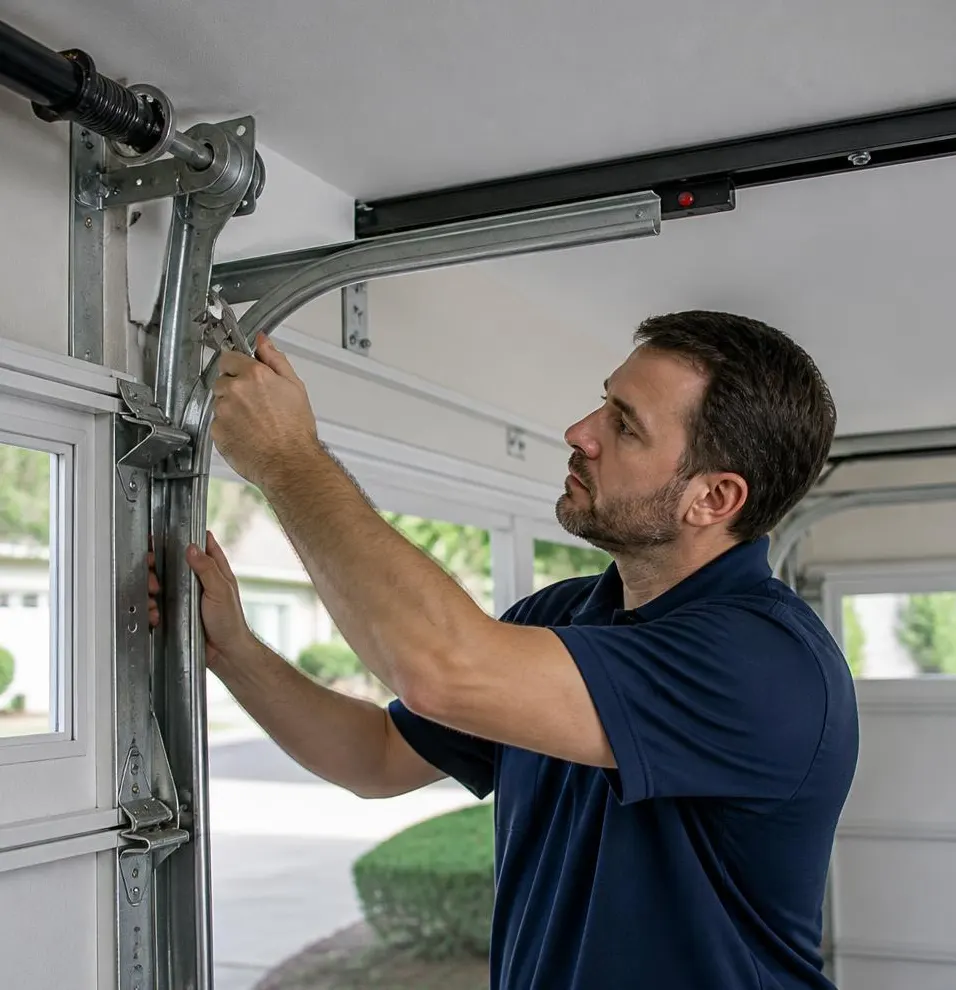
Skip this checklist and the next severe line that rolls through North Texas could cost you a lot more than a garage door. A door that fails under wind pressure doesn't just mean a dented panel — it can mean a pressurized home, a lifted roof section, blown-out windows, or a car trapped under a collapsed track. Insurance claims for wind and hail damage take weeks to settle, and a replacement door ordered after a storm often means waiting behind every other homeowner who had the same idea. An hour of inspection now is cheaper than any of that.
Why the Garage Door Is Your Home's Weakest Wall
Of all the openings in a house, the garage door is by far the largest, and it's built differently than the walls around it. Instead of solid framing, it's a series of thin steel or aluminum panels riding on a track, held in place by rollers, hinges, and a spring system under tension. When straight-line wind hits a closed house, the structure can generally handle the pressure. But if the garage door buckles or blows in, that same wind suddenly has a way inside, and the pressure has nowhere to go but up and out — stressing the roof trusses and exterior walls from the inside. This is why building codes in wind-prone regions treat garage doors as a structural component, not just an appliance.
What Fall Storms in This Area Do to a Garage Door
This time of year, cold fronts pushing into warm, humid air off the Gulf tend to spin up sudden, severe storms with little warning — strong straight-line wind gusts, hail, and blowing dust ahead of the rain. Hail dents panels and can crack plastic lens covers on openers; wind-driven dust works its way into tracks and rollers; and sudden wind gusts put real lateral load on a door that's been sitting there all summer without a second look. A door that closes and opens fine on a calm day can behave very differently when it's being pushed sideways by 50+ mph gusts.
Symptoms That Mean Your Door Won't Hold
- Bowed, dented, or rippled panels — a sign the door has already flexed beyond what it was designed for.
- Cracked, brittle, or missing weatherstripping around the bottom and sides, often from months of summer heat baking the rubber.
- Loose or rusted hinges, rollers, and track bolts — vibration from daily use and wind gradually works these loose.
- A door that hesitates, reverses unexpectedly, or struggles partway through its cycle — often a sign of track misalignment or a weakening spring.
- Visible daylight or gaps at the top corners or sides when the door is fully closed.
- Grinding or binding noises as rollers move through the track, which gets worse once wind starts flexing the panels.
Concrete Steps to Take Before the Next Front
- Tighten every bolt and bracket. Hinges, roller brackets, and track bolts loosen gradually from normal vibration; a quarter-turn with a wrench on each one takes fifteen minutes and removes a lot of play that wind would otherwise exploit.
- Replace worn weatherstripping and the bottom seal. A cracked seal doesn't just let in dust — it lets wind-driven rain pool inside the garage and lets gusts get a grip on the bottom edge of the door.
- Test the auto-reverse safety feature by placing a 2x4 flat on the ground under the closing door; it should reverse immediately on contact. This matters even more when wind is adding unpredictable resistance.
- Lubricate rollers, hinges, and the track with a garage-door-specific lubricant so moving parts don't bind when the door flexes under gusts.
- Know where the manual release cord is and make sure it works, in case a storm knocks out power and you need to open or close the door by hand.
- Trim overhanging branches and clear gutters near the garage so storm debris has less chance of slamming into the door or tracking.
- Walk the door through a full open-close cycle while watching the panels. Visible flex or wobble at the middle of the door is a sign it needs bracing, not just a tune-up.
Reinforce or Replace: The Honest Trade-Off
Older sectional doors, especially lighter single-layer steel ones installed before wind-load bracing was common, tend to flex more under gusts and are the ones most likely to buckle. A horizontal strut reinforcement kit, bolted across the back of each panel, adds real rigidity for a moderate cost and is often the right call for a door that's structurally sound but under-braced. If the door already has hail dents, warped panels, or a track that's bent from a past wind event, reinforcement is just delaying a replacement — and a new insulated door will also handle the swing between long, triple-digit summers and the occasional hard freeze or ice event better than a thin single-layer panel ever will.
When to Call Arlington Garage Door
If you're hearing grinding during operation, seeing a panel that bows when the door is down, or noticing gaps at the corners, don't wait for the next storm to find out how bad it is. Arlington Garage Door can run a full Garage Door Maintenance inspection — checking hardware, seals, and spring tension before wind puts extra strain on all of it — and handle Spring Replacement on the spot if a spring shows rust, stretching, or uneven coils, since a failing spring under storm-load conditions is one of the most common points of sudden failure. And if a door jams shut or won't close at all right as weather is rolling in, our Emergency Garage Door Service is built for exactly that kind of timing.
If you're in Arlington, TX or anywhere nearby and haven't had your garage door looked at since the heat of summer, call Arlington Garage Door today and get it checked before the next front moves through.